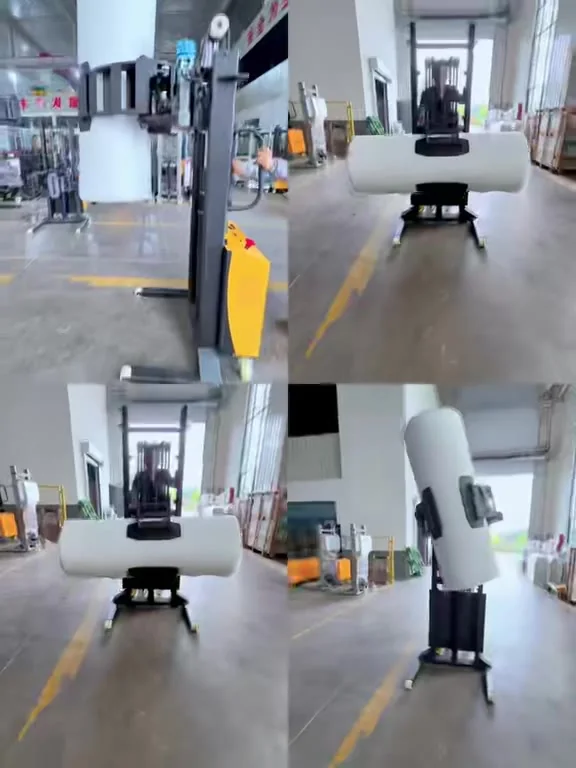
Machine-Side Roll Loading & Reel Positioning
Watch roll positioning near processing equipment. Explore loading requirements for slitting, rewinding, laminating, coating and printing lines.
Video hosted on Google Drive. Playback depends on your network and the file sharing settings. Open original video
The difficult part is often the last movement.
A roll can reach the production line and still be difficult to load. Machine frames, support legs, shafts and loading heights can restrict approach and alignment. Frequent roll changes add repeated manual work at this interface.
Before selecting equipment or materials
Match the material, the operation and the site—not just a catalogue label. Use the checks below to describe the actual task.
Frame, shaft or support arrangement and approach direction.
Weight, width, diameter and pickup orientation.
Required height, surrounding clearance and the transfer route.
Connect transfer with the loading position.
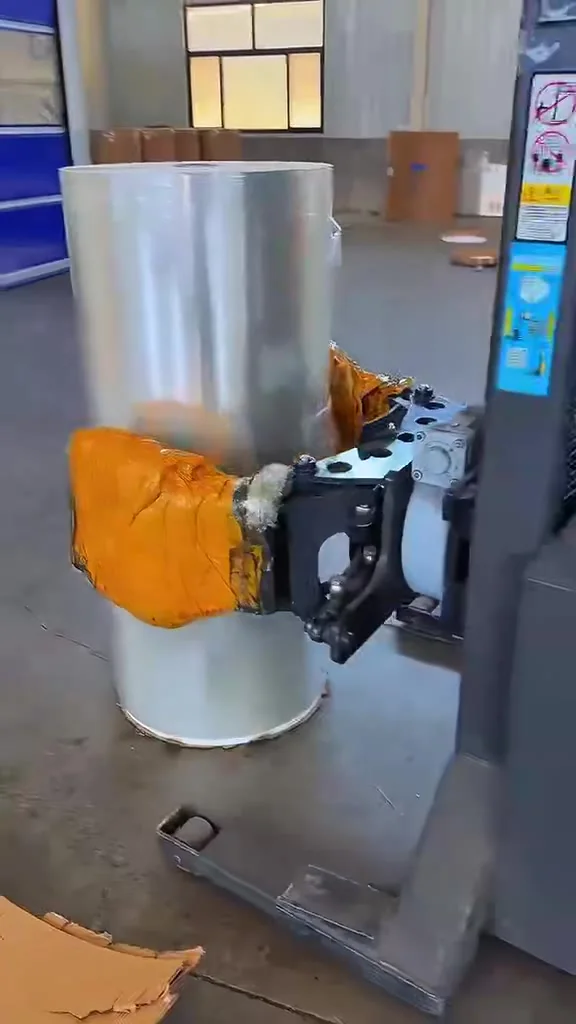
This demonstration shows an orientation and positioning task close to a machine. To assess a reel loading or roll lifting solution, share the pickup position, target centreline, roll dimensions and a photo of the machine interface. The demonstrated movement is not a confirmed installation for every slitter or laminator.
What do you need to assess a roll loader for a slitting machine?
A clear machine-side photograph or layout is as important as the roll weight. Include the roll diameter and width, target loading height, pickup position and any restrictions below or around the machine.